
Drilling a Bedrock Well
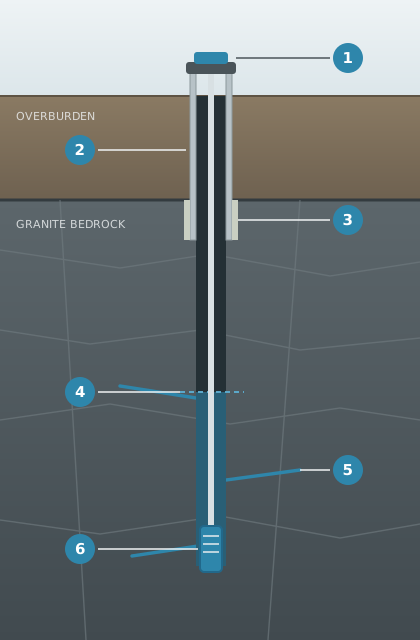
Nearly every new well in this region is a drilled bedrock well. The rig bores through the overburden — the loose glacial till and sand sitting above the rock — then into the granite itself. Steel casing is set through that overburden and grouted into the top of the bedrock, sealing the well off from surface water and shallow groundwater. Below the casing, the well is an open hole in rock.
Where the water actually comes from
Not from a pool at the bottom. Water in granite moves through fractures, and a well produces whatever the fractures it happens to intersect will give it.
Which is why a well that hits a good fracture at 240 feet can out-produce a neighbour's at 420, and why drilling deeper sometimes finds more water and sometimes simply costs more. It is also why the static water level in a well is frequently hundreds of feet above the pump — a 400-foot well is not 400 feet of water.
No honest driller can tell you in advance which you will get. What we can do is give you a range based on genuine local experience, explain where in that range we expect to land and why, and agree beforehand what happens if we run past it.
How We Quote It
| Component | Typical cost | What drives it |
|---|---|---|
| Drilling | $30–$70 per foot | Ground conditions, access, depth |
| Typical Lakes Region depth | 200–500 ft | Where the fractures are. Hill towns deeper than valley ground |
| NH average, new drilled well | ~$14,400 | The statewide figure, for orientation |
| Pump system | $3,000–$8,500 | Pump, tank, pitless adapter, wiring, trench and line |
| Complete system, all in | $3,000–$15,000 | Depending on scope and what is already there |
| Hydrofracking | $2,000–$4,500 | If yield comes in low |
Be sceptical of a fixed total. A tidy single number on a bedrock well is not confidence — it is either heavily padded to cover the worst case, or it is the setup for a conversation you are going to have at 400 feet with a rig on your lot. A per-foot rate, an honest expected range, and an agreed plan for overrun is what a real quote looks like.
- Written estimate with a range and a clear per-foot rate
- Honest explanation of why the range is a range
- Casing set and grouted properly into bedrock
- Agreed plan before we start if depth runs long
- Hydrofracking and storage discussed, not just more depth
- Well completion details recorded for your file
Three Real Answers, and One Wrong One
Sometimes a well comes in below what a household needs. It is not a disaster and it is not unusual on hill ground. There are three genuine remedies, and one instinctive response that makes things worse.
Hydrofracking
Water pressure applied to the bore to open existing fractures and connect the well to more of them. Roughly $2,000–$4,500. Frequently makes a real difference on a marginal bedrock well — but it works with the cracks that are there, so it is not guaranteed and we will say when a well looks like a poor candidate.
Storage
A holding tank that buffers demand against a steady supply. Frequently the best value and the most reliable of the three, because it does not depend on geology cooperating. A modest but consistent yield plus storage serves a household perfectly well.
Deepening
More footage, at drilling rates plus mobilisation. Sometimes finds more water. Sometimes just costs more — you are drilling below the fractures that already failed to supply you, which is worth thinking about before committing.
The wrong answer is a bigger pump. On a low-yield well a larger pump simply empties it faster and then runs dry, which destroys the pump you have just paid for. If anybody proposes more pump as the fix for a yield problem, they have misdiagnosed it.
Access Decides More Than People Expect
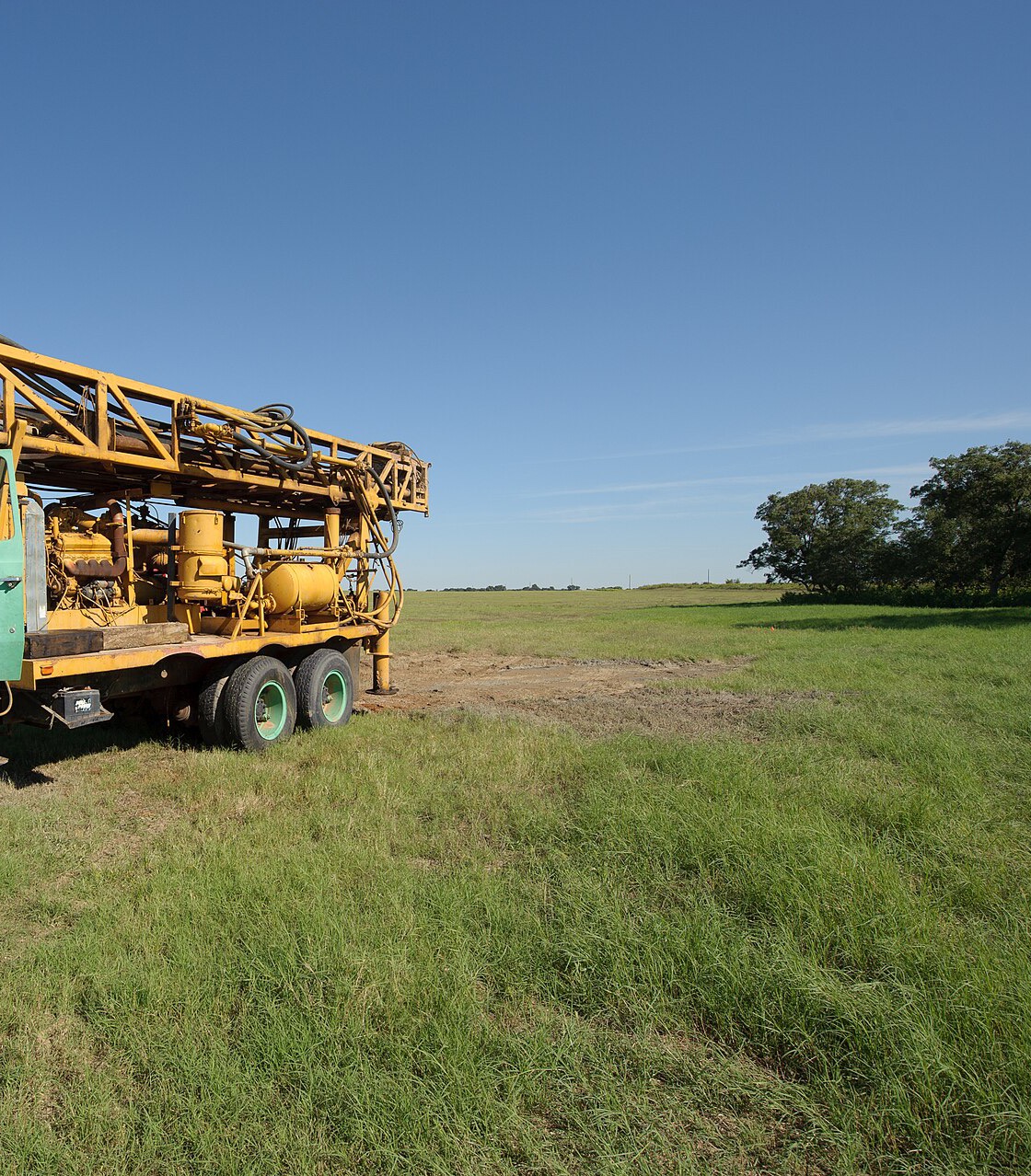
A drilling rig is a large truck, and where it can physically get to is a real constraint rather than a formality. On the wooded lots common around Holderness and Squam, the steep ground above Newfound, and the tight cottage lots at Alton Bay, access frequently decides where the well goes — and occasionally whether a particular location is possible at all.
We assess that at the quote stage rather than discovering it on the day, and we will tell you plainly what getting a rig to a given spot would involve. On properties where minimal disturbance matters — which around Squam is an expectation rather than a preference — that conversation shapes the whole job.
Drilling Questions
How deep will my well need to be?
Commonly 200–500 feet in this region, but the honest answer is that nobody knows until we drill. Yield depends on which fractures the bore intersects, and that varies over surprisingly short distances — a neighbour's depth is weak evidence. We quote a range based on local experience and the specific site, and we agree in advance what happens if we run past it.
How long does drilling take?
Most residential wells are drilled in one to three days once we are on site, depending on depth and conditions. Setting the pump, tank and connections is separate work afterwards. Access is what most often extends it — a site a rig cannot easily reach is a different job from one it can drive onto.
Do I need a permit to drill a well?
New Hampshire regulates well construction and requires water well contractors to be licensed, and completion reports are filed with the state. Local requirements vary by town, and setbacks from septic systems and property lines apply. We handle the state-side process and will tell you what your town needs — check with your town office as well, because requirements differ.
Can I drill near my septic system?
Not freely — minimum separation distances apply and they exist for good reason. On tight lots, particularly older lakeside properties laid out before current standards, this is frequently the constraint that decides where the well can go. It is the first thing we establish on a small lot, before anything else.
What is the difference between a drilled and a dug well?
A dug or shallow well draws from the loose material near the surface; a drilled well goes into bedrock. Dug wells are far more vulnerable to contamination and to running dry in a dry summer, which is why nearly all new wells are drilled. If you have an older shallow well on a property you now occupy year-round, upgrading is worth planning rather than waiting for a dry August to force.